
Email marketing works. Yours does not.
You put the work in.
Two hundred companies looked up, one imprint page at a time. The pitch rewritten three times so it would not read like an ad. Thursday night, half past ten, you hit send.
Then: nothing.
Monday brings two out-of-office replies and a no from someone who is not even the right person.
You read your email again. It is not bad. So you rewrite it anyway. Next round, nothing again.
And at some point you think: cold email just does not work any more.
That thought is wrong. And it is expensive.
Because email marketing is not one thing you do. It is five, and they all have to be right at the same time. Most people get two of them.
One: who you write to. A bought list, an export from some directory, plus a few companies that might somehow fit. Part of those addresses no longer exist, part were never your target group. And every dead address costs you more than the email — it counts against your sender.
Two: what is in it. The subject line reads like a sales pitch. The first sentence introduces you. Then three paragraphs about everything you do, how long you have been around and how bespoke your work is. Not a word about their company, no question they could answer in ten seconds, and at the end "Looking forward to hearing from you" instead of a concrete next step. They do not need two lines to know this went to two hundred others.
Three: how often. You write once. But most replies come from the second and third email — and you never send those, because Monday got in the way.
Four: what you send with. Two hundred emails in an hour from your normal company mailbox. At that point it is not the recipient who decides about your email, it is Google and Microsoft — and they do not look at your copy, they look at your sender.
The spam folder never sends you a rejection. All you see is that nobody replies. And your domain reputation takes the hit with it: one summer of cold outreach, and your invoices land in spam.
Five: keeping track. Who has been contacted? Who replied? Who is waiting for a quote, who do you need to chase next week?
For most people that lives in a spreadsheet, in the inbox and in their head — so nowhere, really. After four weeks nobody knows who has already been contacted. Some get the same email twice, others never get a reply to their reply.
Without a system, outreach is not a process. It is an act of memory. And that lasts exactly until you get busy.
Sooner or later someone tells you: just get a tool. Most come from the US and are English-only. You buy the addresses separately, register domains somewhere else and set up mailboxes somewhere else again. Four subscriptions for one process — and four of the five points still sit with you.
But this is not about software. This is about you.
Email marketing never fails on one thing. It fails because four points are right and the fifth one sinks it.
Writing a good email is a skill. Five points can be built — that is a system, not talent.
That is exactly what we built Mandokit for: the right recipients, copy that actually refers to them, follow-ups that chase on their own, senders that get built up instead of burned — and an overview that tells you who is due today.
Two reasons email marketing does not work for most people. We take both off your hands.
All by hand.
- Research: look up every company one by one.
- Personalisation: write every email one by one.
- Costs you time — every single day.
- Not scalable: more than twenty a day is not happening.
Nothing about that is plannable or scalable.
All automatic.
- Research runs along: companies, contacts, verified address.
- Personalisation happens automatically — every email gets its own reference.
- Saves you the time: set it up once, then it runs.
- Scalable: twenty recipients or two thousand, same work.
This is why nobody replies!
- Whoever happens to be on the list gets contacted.
- Addresses from a bought list — part of them are dead.
- The copy is written on gut feeling. Whether it works, you do not know.
- Written once, never followed up.
No wonder: you have no idea about cold email. Why would you.
Higher reply rate.
- Leads get qualified — only companies that fit get contacted.
- Email addresses get validated first. You never see a dead address.
- The message gets checked before sending — it only goes out on a good score.
- Follow-ups chase automatically. That is where most replies come from.
Three steps to email marketing that arrives
Strictly speaking only the first step is yours. Building, spreading, monitoring and following up runs on its own after that — you can close the laptop.
Say who you write to
Industry and radius are enough. Mandokit finds the companies with contacts and verifies every address before it lands in your list. Your own list as Excel or CSV works just as well.
Set up the sender
You book domain and mailboxes along with it, DNS records get checked, the warm-up starts on its own. Or connect existing mailboxes instead — Mandokit tells you what is missing.
Write the sequence once
First email plus two or three spaced follow-ups. The personalisation comes from what was found about the company. After that Mandokit sends, follows up and stops on a reply.
Between step one and three you touch nothing. And if you do not look for two weeks, the sequence keeps running, throttles when something looks off and collects the replies for you.
Sent is not the same as arrived. We take care of the difference. No spam folder. One tool instead of four.
Say who you want. The tool does the rest.
Industry plus radius in. Out come vetted companies, a sorted pipeline and emails that land in the inbox.
This is what your outreach looks like from tomorrow.
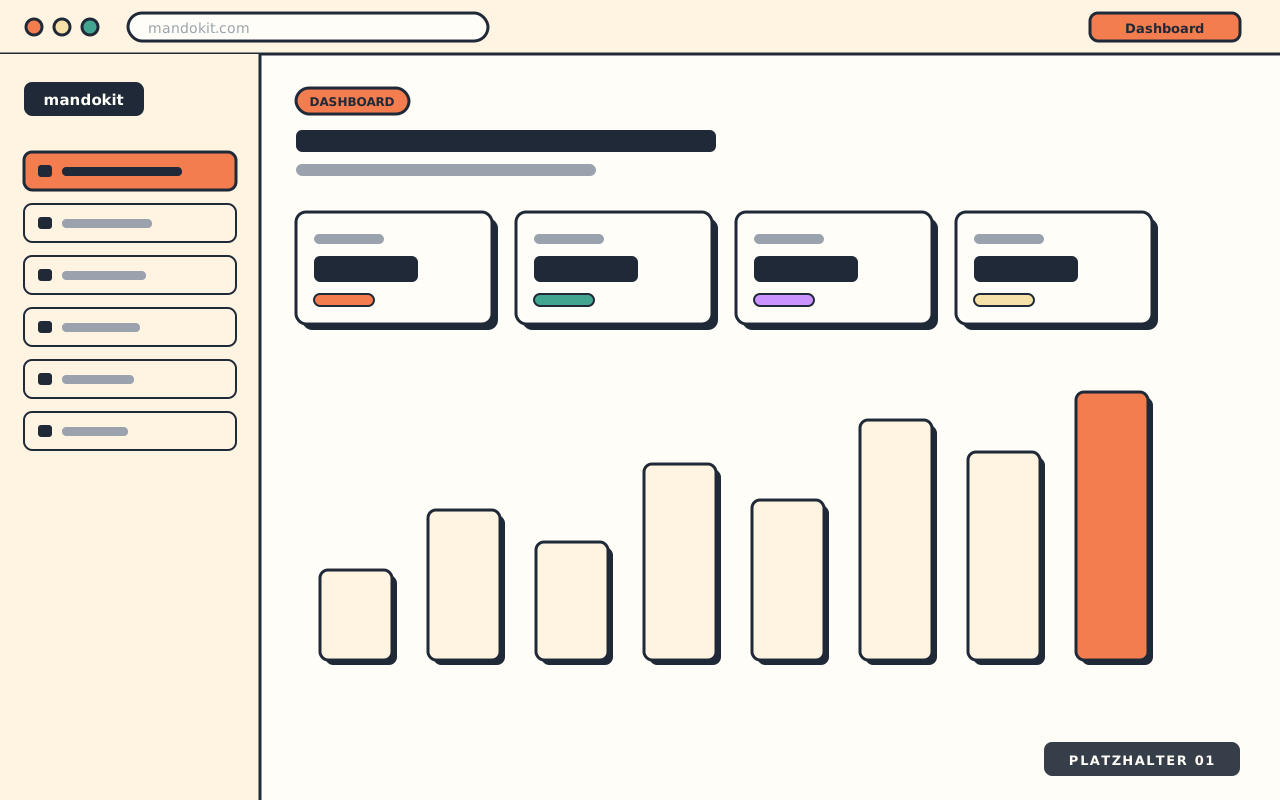
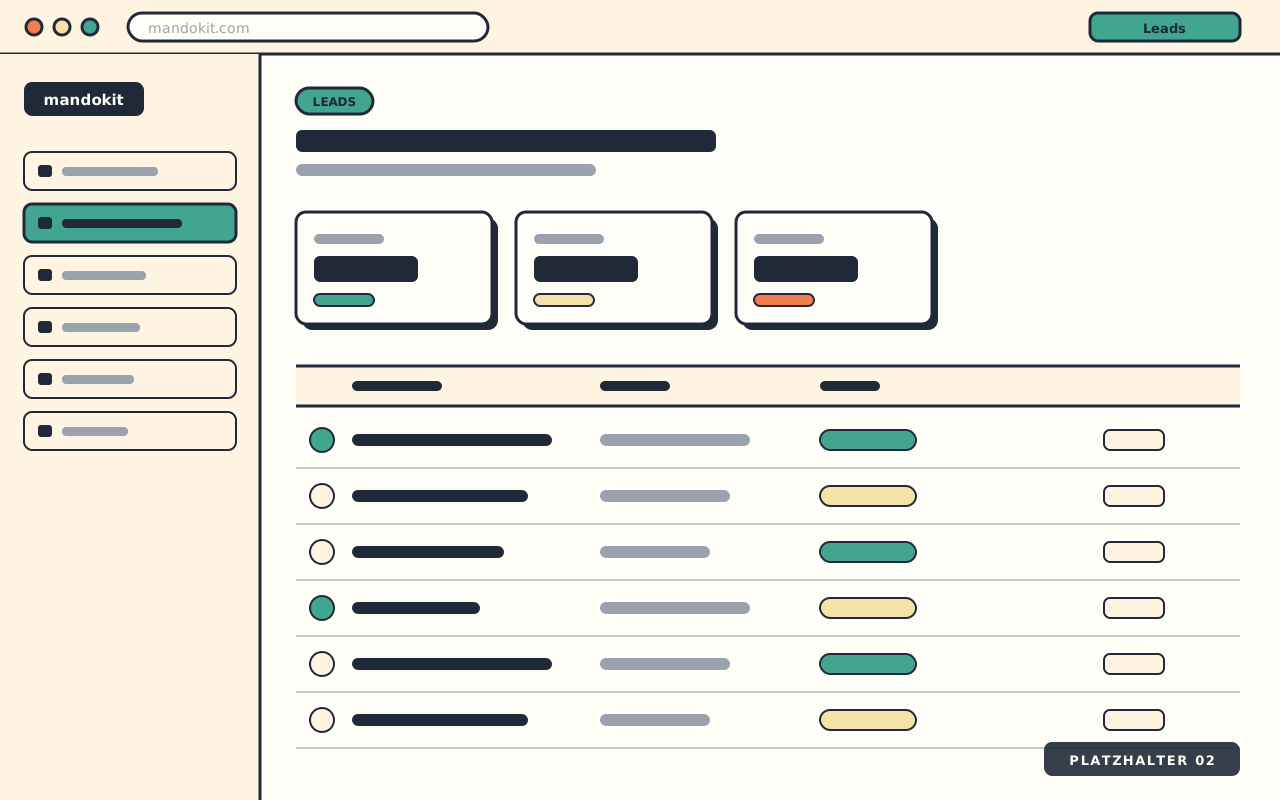
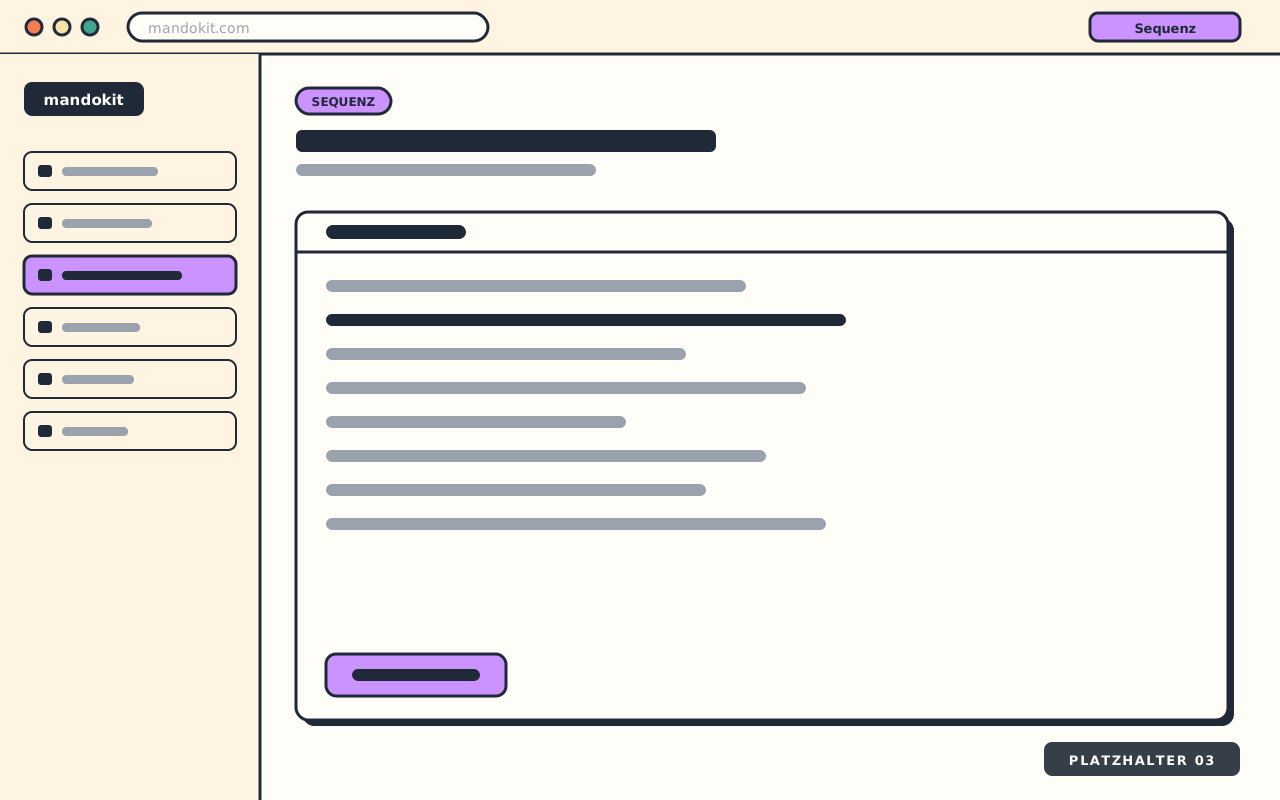
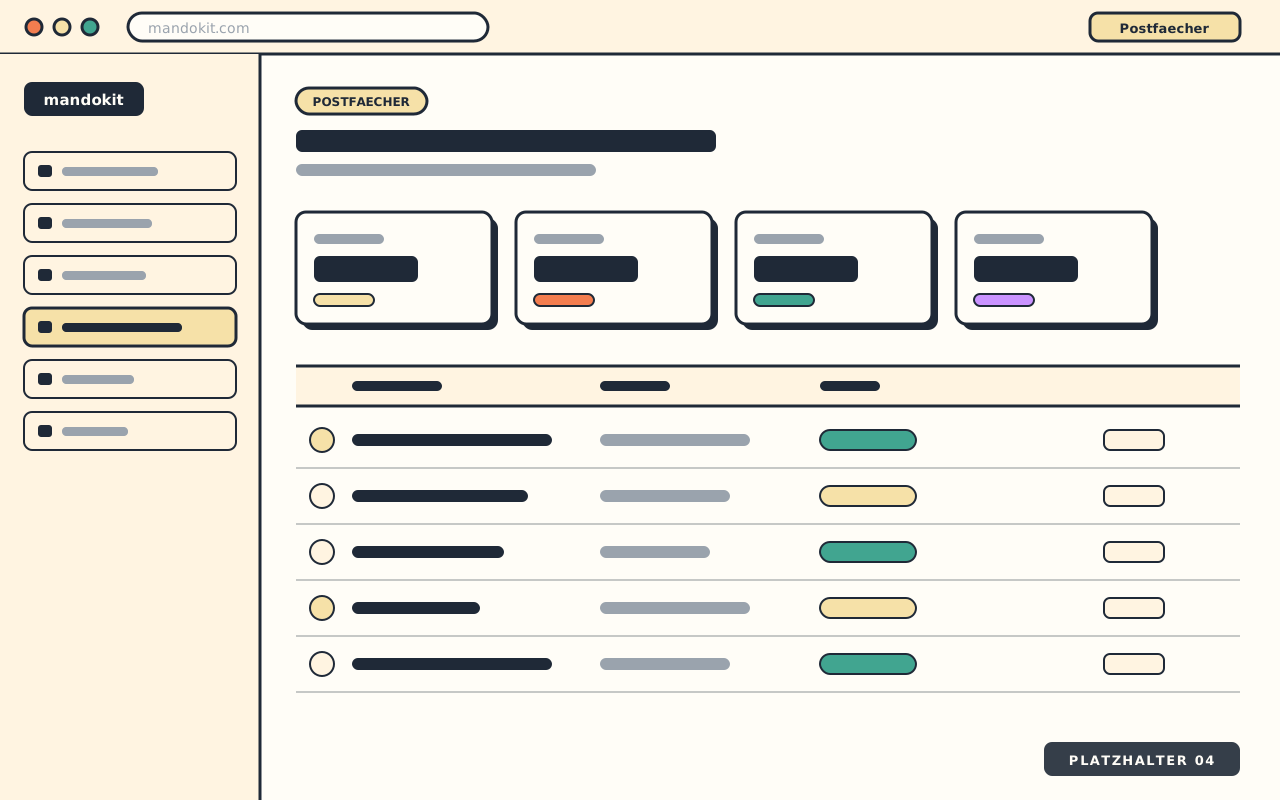
One tool instead of spreadsheet, inbox and sticky notes: search run, list, sequence and reporting in one place.
Common questions about email marketing and cold email
Stop leaving customer acquisition to chance
. Build a system.
Free to start. No credit card. Up and running in 5 minutes.